
About Rajasthan Desert
Rajasthan is India's largest state and its most colorful. From the golden sand dunes of Jaisalmer to the blue city of Jodhpur, from the lake palaces of Udaipur to the pink walls of Jaipur — every city tells a royal tale. The Thar Desert offers camel safaris under star-filled skies, while centuries-old forts and palaces showcase Rajput architectural brilliance. The state is also India's handicraft capital, with block printing in Sanganer, blue pottery in Jaipur, and miniature paintings in Udaipur.
Top Attractions
10 curated experiences — from the iconic to the hidden
Jaisalmer Fort (Sonar Quila)
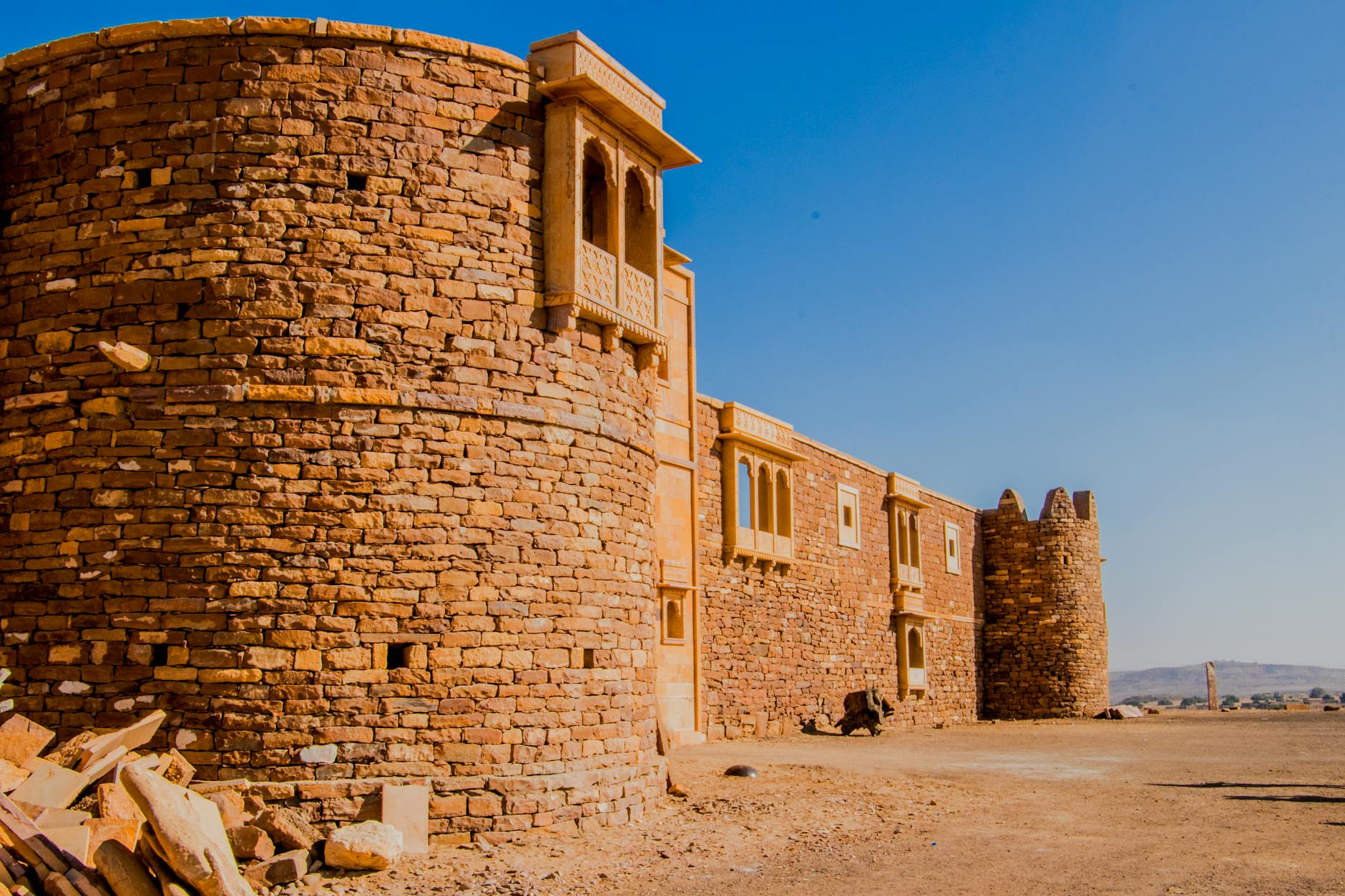
The "Golden Fort" — one of the very few living forts in the world, with around 3,000 people still residing within its 99 bastions of honey-coloured sandstone. Built by Rawal Jaisal in 1156, it sits like a fairy-tale on Trikuta Hill above the Thar Desert. UNESCO World Heritage Site.
- Raj Mahal palace museum
- Seven interconnected Jain Temples (12th–15th C)
- Lakshminath Temple at the centre
- Patwon and Salim Singh haveli viewpoints from the ramparts
The fort is genuinely overcrowded; the seepage from drainage and modern plumbing is slowly dissolving the foundations. UNESCO advises against staying inside the fort — please don't. Heritage hotels in the city below offer the same atmosphere without the damage.
Sam Sand Dunes & Camel Safari
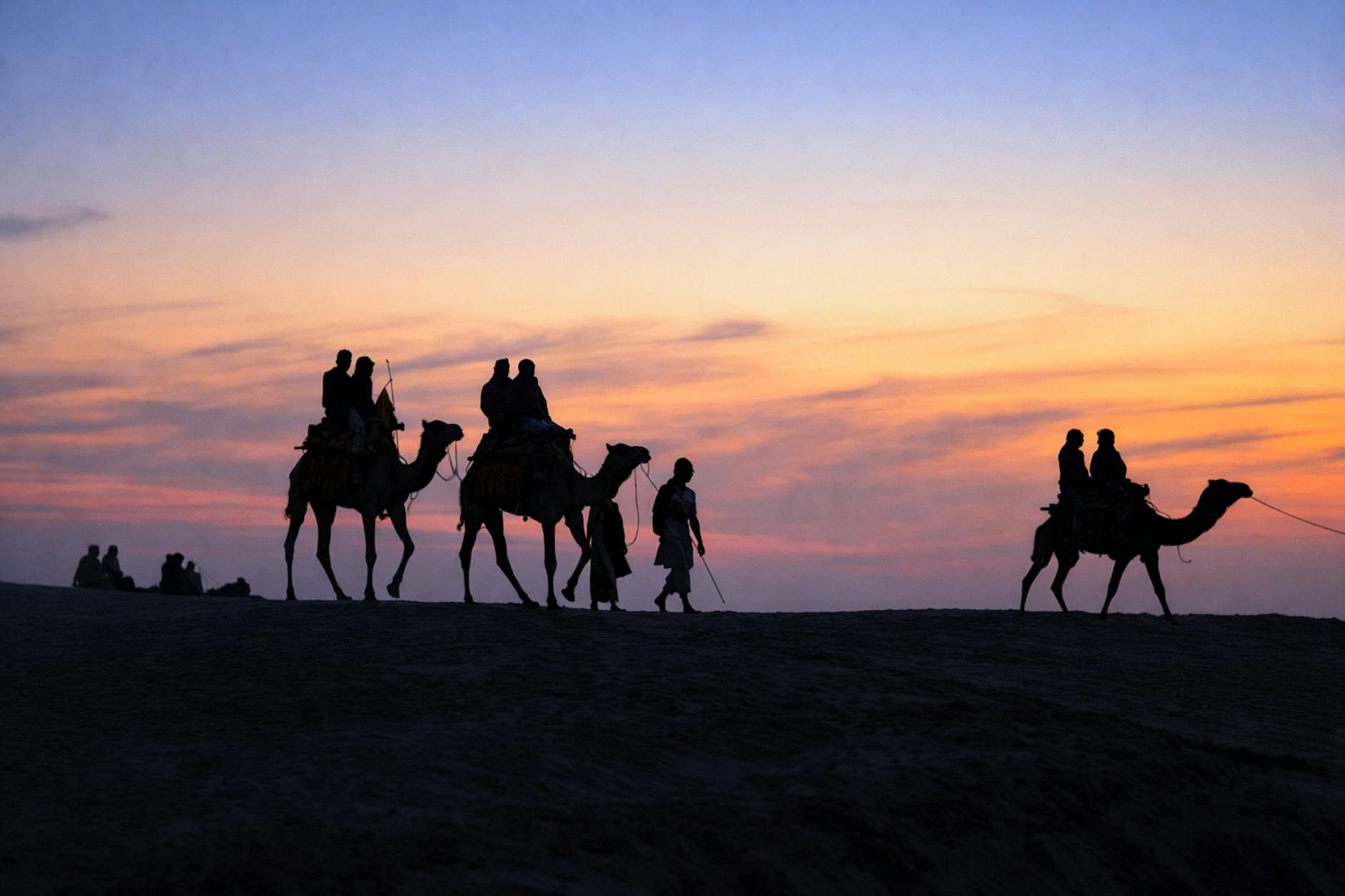
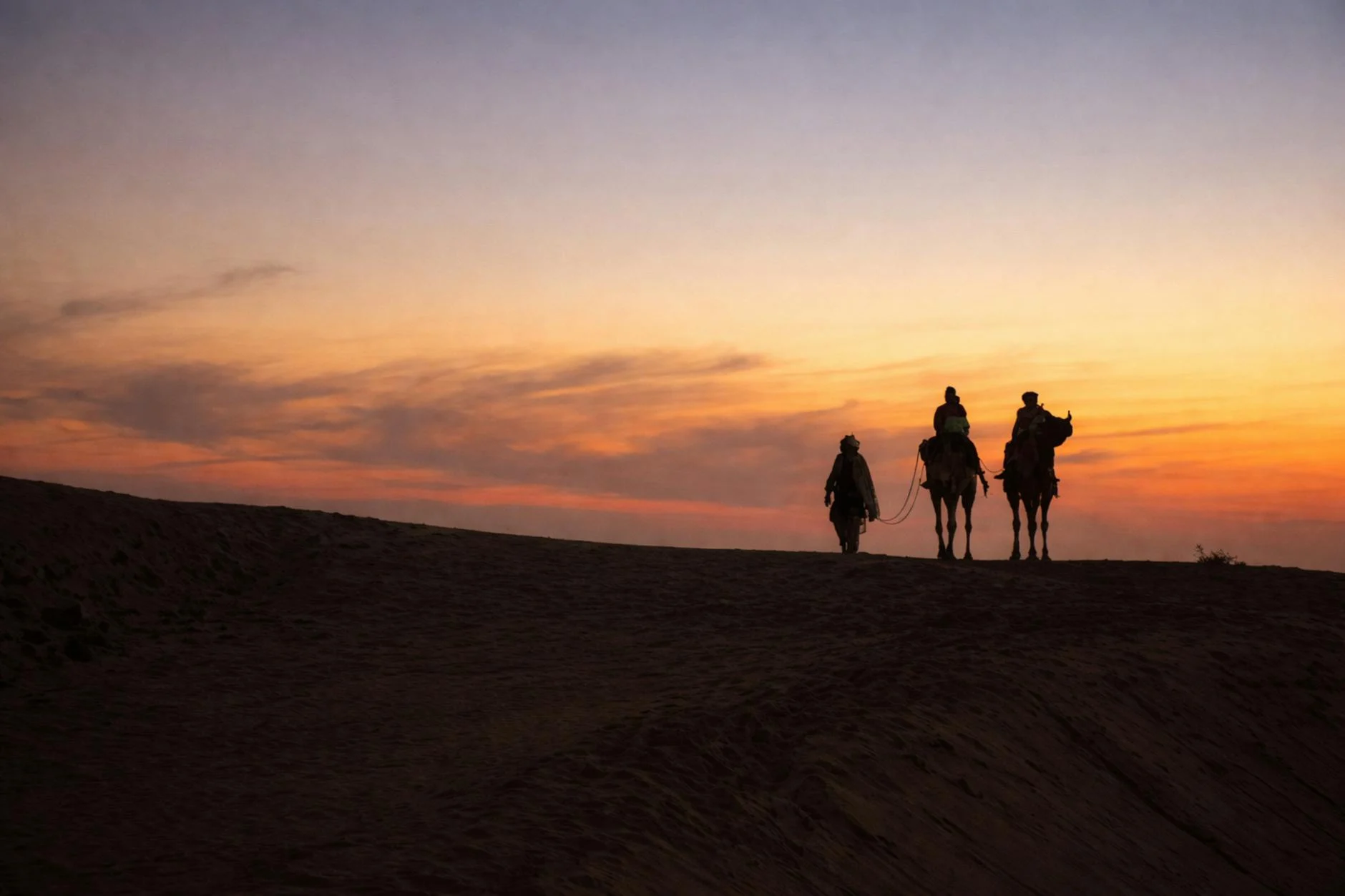
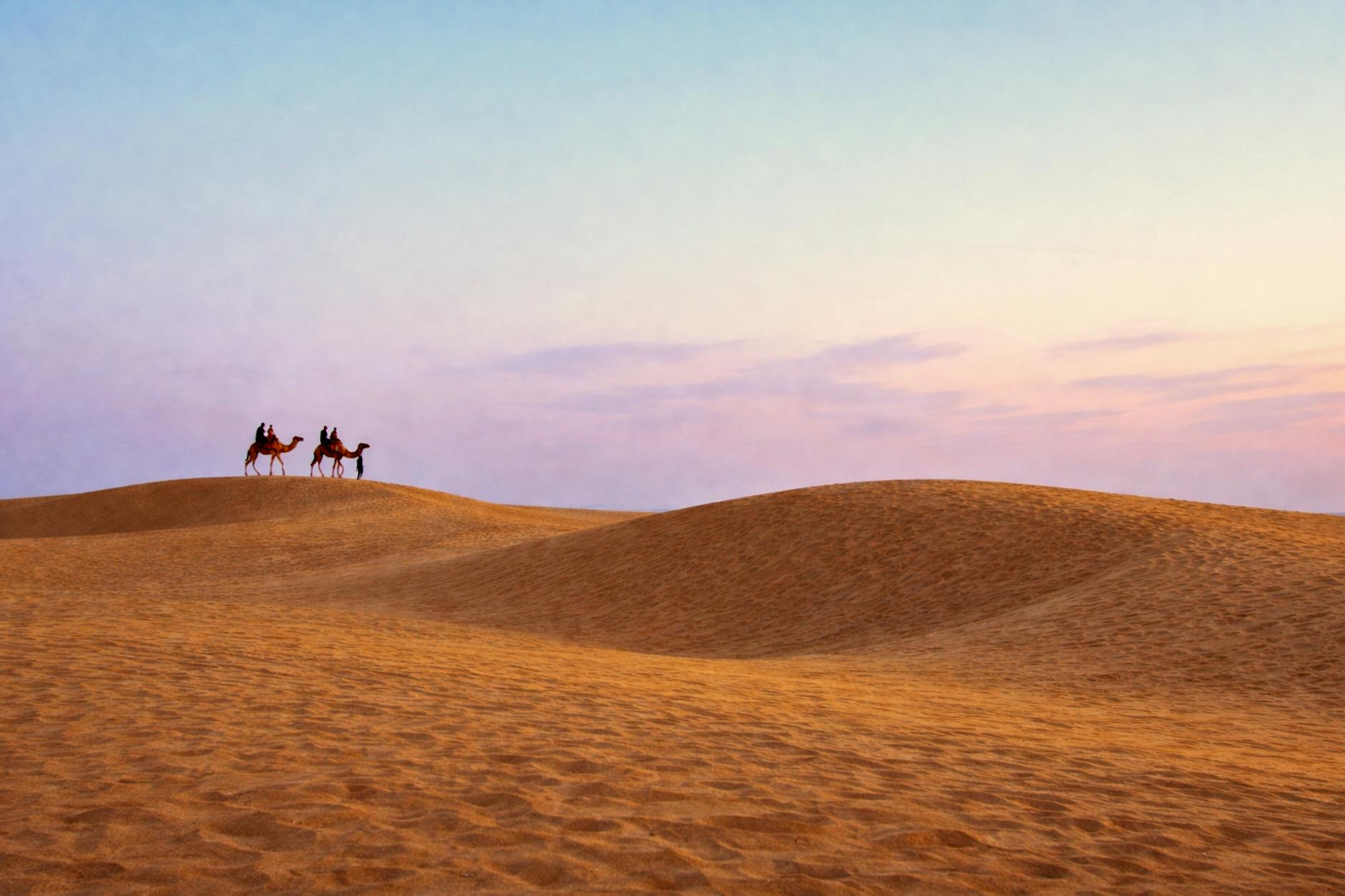
The 42 km drive west of Jaisalmer to the Sam Dunes is the iconic Thar Desert experience. A late-afternoon camel ride into the dunes, sunset over rippled sand, dinner in a luxury tent camp with Manganiyar musicians and Kalbelia dancers — quintessential Rajasthan.
- Sunset camel ride into the dunes
- Manganiyar folk musicians at the campfire
- Kalbelia dance performance
- Star-watching after dinner — minimal light pollution
Khuri Dunes (40 km south of Jaisalmer) are quieter and more authentic than Sam — Sam is the "tourist desert," Khuri the real one. Suryagarh and The Serai are the luxury tent options; mid-range camps charge ₹2,000–4,000 per night.
Patwon-ki-Haveli, Jaisalmer
The largest of Jaisalmer's mansion-houses — five interconnected havelis built between 1800 and 1860 by Guman Chand Patwa, a wealthy Jain trader. The latticework facades are the most ornate in Rajasthan. Three of the five are now museums.
- Five-storey jharokha-laden facade
- Original 19th-century furniture and costumes
- Rooftop view across Jaisalmer's old city
- Combine with Salim Singh ki Haveli and Nathmal ki Haveli
The facade is best photographed from the small square in front — there's only one good angle. Inside is fine but don't expect the polish of City Palaces; this is family heritage, not a national museum.
Kuldhara Ghost Village
A 17 km drive from Jaisalmer brings you to Kuldhara — a 13th-century Paliwal Brahmin village abandoned overnight in 1825. Local legend says the residents fled and cursed the village so no one could ever live there again. Geological evidence suggests an earthquake. Either way, the silent ruins under desert sun are haunting.
- Walk through 600+ abandoned stone houses
- Restored temple at the village centre
- Surrounding 84 villages all abandoned same night
- The complete silence — a desert acoustic
Combine with the Sam Dunes safari — both lie west of Jaisalmer on the same road. Don't go alone after dark; rangers close the site. The story-tellers at the entrance are entertaining; tip them ₹100.
Mehrangarh Fort, Jodhpur
The mightiest fort in Rajasthan — 125m of perpendicular cliff topped by 360m of sandstone walls, built by Rao Jodha in 1459. Rudyard Kipling called it "the work of giants." The internal museum is genuinely world-class; the views over the indigo-blue old city below are unforgettable.
- Phool Mahal — gold-leaf inlay throne room
- Sheesh Mahal — mirror palace
- Hand prints of royal sati widows on the gateway
- Audio guide narrated by the current Maharaja
Take the elevator up if mobility is a concern; otherwise the 1 km walk-up is part of the experience. Café Mehran on the rampart has the best blue-city view in town. Stay for the sunset.
Jaswant Thada, Jodhpur
The marble cenotaph of Maharaja Jaswant Singh II, built 1899 in dazzling white marble that's so fine it's translucent in sunlight — locals call it the "Taj Mahal of Marwar." A small but exquisite jewel a 5-minute drive from Mehrangarh.
- Translucent marble panels
- Royal cenotaphs of the Marwar dynasty
- Reflection in the lotus pond
- Quiet alternative to the bustling fort
Combine with Mehrangarh in the same trip — they're a 5-minute drive apart. The pond out front fills only in monsoon; otherwise it's a stone garden.
Blue City Walk & Stepwell, Jodhpur
Jodhpur's old city is famously painted in indigo blue — originally to mark Brahmin homes, now adopted across the quarter. The narrow lanes around the Toorji Ka Jhalra (1740 stepwell) are the most photographed; the Stepwell area has been restored into a buzzing café-bar zone.
- Toorji Ka Jhalra restored stepwell
- Stepwell Square bars and cafés
- Narrow blue lanes around Navchokiya
- Sardar Market clock tower for spices
Best done with a local guide on foot — the lanes are a maze and the photogenic stretches need pointing out. Reverberate Café and Indique restaurant offer rooftop fort views. The blue is brightest after a fresh paint job, usually pre-Diwali (October).
City Palace, Udaipur
The largest royal complex in Rajasthan — an 11-palace amalgam built over 400 years (1559 onwards) by 22 Mewar maharanas. Granite and marble construction, balconies, towers, cupolas, and a museum of royal armour, paintings, and silver howdahs. Still partially occupied by the royal family.
- Manak Mahal — crystal palace
- Mor Chowk — peacock courtyard with mosaic peacocks
- Sheesh Mahal — mirror palace
- Bhim Vilas — Krishna miniature paintings
Get the combined ticket including Crystal Gallery and Vintage Car Museum. Lake Palace and Jag Mandir on the lake are former royal summer palaces — now Taj heritage hotels accessible by boat. Lunch at Jag Mandir if budget allows.
Lake Pichola Boat Ride, Udaipur
The artificial 4 km lake created in 1362 — and the reason Udaipur is called the "Venice of the East." Sunset boat rides circle the Lake Palace (now Taj Lake Palace hotel), Jag Mandir island, and the lake-facing Ghats. The 30-minute ride at golden hour is one of India's most romantic experiences.
- Lake Palace floating on water
- Jag Mandir island — landing for chai or dinner
- Bagore-ki-Haveli ghats from the lake
- Aravalli hills silhouette at sunset
The standard 1-hour boat ride includes a 20-minute landing at Jag Mandir — perfect for sunset cocktails. Boats leave from Rameshwar Ghat near the City Palace and from Lal Ghat. The Taj Lake Palace and Jagmandir both run separate luxury cruises with dinner.
Bishnoi Village Safari, Jodhpur
The Bishnoi are a 500-year-old Hindu community whose 29 principles include protecting all life — they're famous for guarding the blackbuck antelope and khejri trees with their lives. A jeep safari to Bishnoi villages 25 km south of Jodhpur reveals a way of life utterly distinct from urban India: traditional opium ceremonies, hand-spun cotton, terracotta crafts.
- Blackbuck and chinkara herds in the wild
- Bishnoi opium hospitality ceremony (cultural ritual)
- Salawas durrie weaving demonstration
- Singhvi terracotta potter village
Book through reputable operators (Hotel Pal Haveli, Devi Bhawan, Bishnoi Village Safari) for ₹1,500–2,500 per person. Avoid the "free" tours offered by carpet shops — they're sales pitches in disguise. The opium ceremony is part of authentic Bishnoi hospitality, but you can decline.
Suggested Itinerary
A carefully curated journey through Rajasthan Desert's most iconic monuments and hidden gems
Jaisalmer — The Golden Fort
Living fort, havelis, sunset on the ramparts.
Thar Desert
Kuldhara ghost village, then sunset on the dunes.
Jodhpur — Blue City
Drive over (or fly), then Mehrangarh and Jaswant Thada.
Bishnoi & Blue City Walk
Morning safari, afternoon old city, sunset stepwell.
Udaipur — City of Lakes
Drive or fly, City Palace, sunset on Lake Pichola.
Practical Guide
Getting There
By Air: Jaisalmer (JSA) has limited flights — mostly Delhi, Jaipur. Jodhpur (JDH) has more frequent connections. Udaipur (UDR) is well-connected to all metros. Most travelers fly into Delhi/Jaipur and drive a circuit through the desert.
By Train: The Palace on Wheels is the storied luxury train — Delhi → Jaipur → Sawai Madhopur → Chittorgarh → Udaipur → Jaisalmer → Jodhpur → Bharatpur → Agra → Delhi over 7 days. The Maharajas' Express is the modern equivalent. Regular trains: Delhi-Jaisalmer overnight (16 hours).
By Road: Driving the circuit is the most flexible option. Distances: Jaipur-Jaisalmer 560 km / 10 hr; Jaisalmer-Jodhpur 285 km / 5 hr; Jodhpur-Udaipur 250 km / 5 hr. Roads are good NH-grade tarmac throughout.
Getting Around
Car And Driver: Essential for the Rajasthan circuit. ₹15–18/km plus driver allowance ₹500/day. A 5-day private circuit with driver: ₹25,000–35,000. Most travelers don't self-drive in India — driver knowledge of conditions matters.
Auto Rickshaw: Within each city, ubiquitous and cheap. ₹50–200 for short hops in Jodhpur and Udaipur old cities. Often cheaper to walk inside the old quarters.
Camel Or Jeep In Desert: For desert excursions only. Camel for the romance, jeep for distance. Always book through your hotel — they vet the operators.
Walking: Inside the old cities of Jaisalmer, Jodhpur and Udaipur, walking is the only way through the lanes. Closed shoes recommended; surfaces are uneven.
Where to Stay
- Jaisalmer Old City (outside fort) — Heritage havelis Suryagarh, Killa Bhawan, Hotel Killa Bhawan, Garh Jaisal. ₹3,000–35,000. Stay outside the fort to help preserve it; views back are stunning.
- Jodhpur Stepwell Square — Restored old-city haveli stays RAAS Jodhpur, Pal Haveli, Toorji Ka Jhalra. ₹6,000–25,000. Best location for the Blue City + fort views.
- Udaipur Lal Ghat — Lakeside heritage hotels Jagat Niwas Palace, Amet Haveli, Lake Pichola Hotel. ₹4,000–18,000. Steps to the lake; restaurants on rooftops.
- Lake Palace / Jag Mandir (Udaipur) — Royal island palaces Taj Lake Palace, Jagmandir Island Palace. ₹40,000–1,50,000+. Once-in-a-lifetime if budget permits.
Day Trips & Nearby
- Pushkar — 4 hr from Jodhpur (300 km) / 2.5 hr from Jaipur Sacred lake town with India's only Brahma temple. The November Camel Fair is one of the world's most photographed events. Quiet and atmospheric outside fair-week.
- Ranakpur Jain Temple — 2.5 hr from Udaipur (90 km) A 15th-century marble Jain temple with 1,444 pillars — no two carved alike. One of the most spectacular interiors in India and perfect as a half-day trip from Udaipur.
- Kumbhalgarh Fort — 3 hr from Udaipur (85 km) The "Great Wall of India" — 36 km of unbroken fortification (second-longest in the world after China's). Combine with Ranakpur as a single day trip from Udaipur.
- Mount Abu — 3.5 hr from Udaipur (165 km) Rajasthan's only hill station — cool relief in summer. Dilwara Jain Temples (11th–13th C) have some of India's finest marble carving. Nakki Lake for boating.
Gallery
Travel Tips
Heritage Hotels: Stay in converted palaces and havelis for an authentic royal experience.
Festivals: Pushkar Camel Fair (November) and Desert Festival (February) are unmissable.
Shopping: Jaipur is India's gemstone capital — buy from certified dealers.